
This page contains information intended exclusively for healthcare professionals. By proceeding, you confirm that you are a physician or another qualified healthcare professional.
Personalized Cell Manufacturing
For both Injectable MACT and Scaffold-Based MACT, the production of high-quality chondrocytes is an essential prerequisite for treatment success. Each transplant is manufactured over the course of several weeks, including cell cultivation, comprehensive quality and sterility testing, and final product release. Experienced specialists and carefully controlled processes help ensure consistently high product quality.
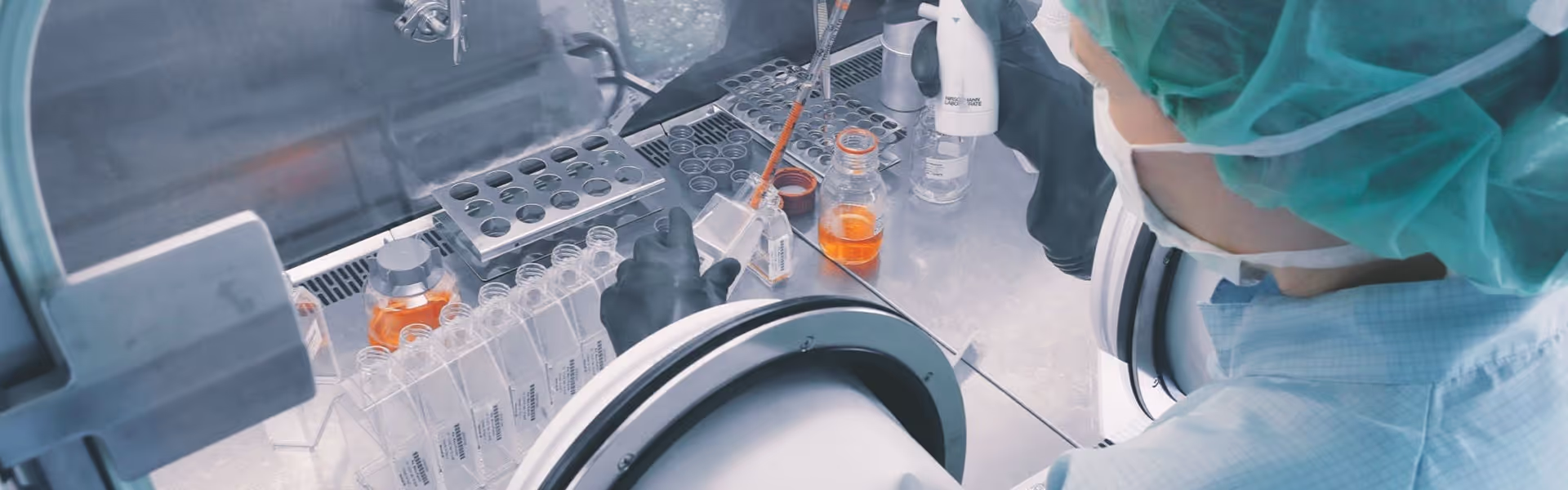
Manufacturing Under Controlled Cleanroom Conditions
At TETEC's facility in Reutlingen, all manufacturing steps are performed in closed isolator systems within a GMP-certified cleanroom environment. Materials and equipment are transferred into the isolator through hydrogen peroxide-sterilizable ports. Defined pressure zones and HEPA-filtered airflow help maintain controlled conditions for aseptic manufacturing.
.avif)
Inside the Isolator
Cell manufacturing takes place within our isolator system under carefully controlled conditions. Learn how trained specialists, established processes, and continuous monitoring contribute to the quality and safety of each transplant.
During the approximately 21-day cultivation process, patient-specific cells are closely monitored by experienced specialists. All manufacturing steps, including cell seeding, media changes, centrifugation, and sample collection, are performed under controlled conditions. Comprehensive documentation and continuous monitoring in accordance with GMP standards help ensure consistently high quality.
Temperature, nutrient supply, and other culture conditions are continuously monitored and controlled throughout the manufacturing process. Comprehensive quality testing is performed at defined stages of the process. Only transplants that meet all predefined quality specifications are released for clinical use.
Each tissue transplant is manufactured individually for a single patient and remains fully identifiable and traceable throughout the entire manufacturing process.
Toward Automated Manufacturing
Scalability Through Automation
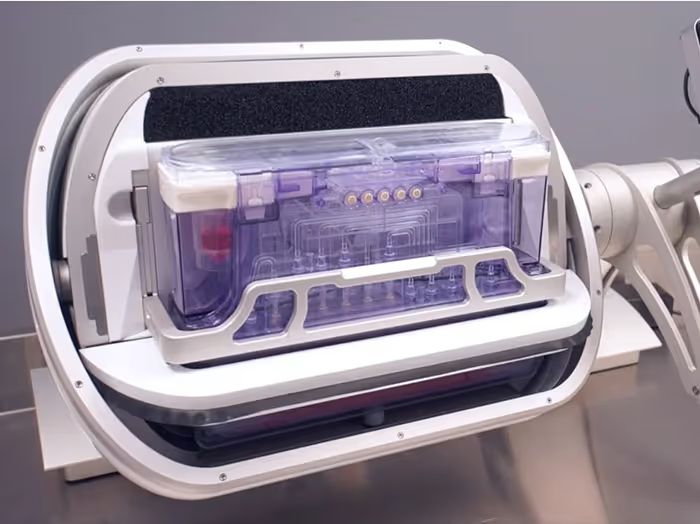
In 2024, TETEC joined the Octane Medical Group. As part of this integration, we are planning to expand manufacturing capacity through the introduction of the Octane Cocoon® bioreactor, a fully automated, closed-system platform for cell therapy manufacturing. Learn more about our collaboration with Octane and our shared goal of expanding access to personalized cell therapies through automation.
Quality Assurance
Our autologous chondrocyte transplants are manufactured to the highest standards of quality, safety, and regulatory compliance. Learn more about our manufacturing and quality control processes, as well as the scientific evidence supporting product quality and safety.
Manufacturing in cleanroom facilities under the oversight of the Tübingen Regional Council and the federal regulatory authority, the Paul-Ehrlich-Institut.
Before release, each transplant undergoes batch-specific testing for sterility, cell viability, and gene expression.
As part of the molecular characterization of each transplant, cartilage-specific gene expression markers are analyzed using quantitative polymerase chain reaction (qPCR).
Cells are cultivated without antibiotics. No genetic modification is performed.
Our collagen- and hydrogel-based biomaterials, developed specifically for MACT, support high cell viability and help maintain the natural spherical morphology of chondrocytes, two important prerequisites for the formation of high-quality cartilage repair tissue. These properties have been demonstrated in both internal investigations and independent studies. In addition, the biomaterials support uniform chondrocyte distribution and the formation of cartilage-like tissue in vitro and in vivo [1-4].
Manufacturing and product release are performed in accordance with EU ATMP regulations and under the oversight of the Tübingen Regional Council and the federal regulatory authority, the Paul-Ehrlich-Institut.
1. Nuernberger et al. The influence of scaffold architecture on chondrocyte distribution and behavior in matrix-associated chondrocyte transplantation grafts. Biomaterials. 2011 Feb;32(4):1032-40.
2. Scholz et al. Suppression of adverse angiogenesis in an albumin-based hydrogel for articular cartilage and intervertebral disc regeneration. Eur Cell Mater. 2010 Jul 13;20:24-36; discussion 36-7.
3. Bretschneider et al. Characterization of primary chondrocytes harvested from hips with femoroacetabular impingement. Osteoarthritis Cartilage. 2016 Sep;24(9):1622-8.
4. Niemeyer et al. Treatment of Large Cartilage Defects in the Knee by Hydrogel-Based Autologous Chondrocyte Implantation: Two-Year Results of a Prospective, Multicenter, Single-Arm Phase III Trial. Cartilage. 2022 Jan-Mar;13(1):19476035221085146.