

Treating Knee Cartilage Damage with Your Own Cells
Scaffold-Based MACT (Matrix-Associated Autologous Chondrocyte Transplantation) is a form of autologous chondrocyte transplantation (ACT) in which a patient's own cartilage cells are seeded onto a biphasic collagen scaffold and transplanted into the cartilage defect. Scaffold-Based MACT has been used in routine clinical practice in Germany for more than 20 years.

The Basics
.avif)
Your Own Cells
A collagen scaffold is seeded with your own cartilage cells and implanted into the cartilage defect to support the formation of new cartilage tissue.
Talk to a Specialist
A specialist can explain the clinical experience gained with Scaffold-Based MACT and assess whether this treatment may be suitable for your knee.
Your Path to Cartilage Regeneration in Four Steps
Cartilage regeneration using Scaffold-Based MACT involves four coordinated steps:
Tissue Collection
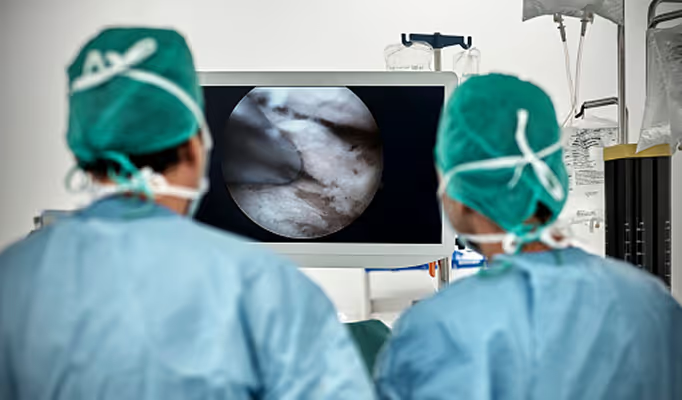
Small cartilage-bone biopsies are collected from a healthy, non-weight-bearing area of the knee during an arthroscopic procedure (keyhole surgery) and transported under controlled conditions to the manufacturing facility.
Transplant Manufacturing at TETEC
At TETEC, the cells obtained from the biopsies are expanded in the laboratory and seeded onto a three-dimensional collagen scaffold, creating your individual transplant.
.avif)
Transplantation
The cell-seeded collagen scaffold is transplanted into the damaged area of the knee and secured using sutures. The procedure requires a small surgical incision (mini-arthrotomy).
Rehabilitation
Following surgery, rehabilitation begins. The rehabilitation program depends, among other factors, on the location of the cartilage defect within the joint. Physiotherapy supports healing and recovery of joint function. Treatment progress is monitored through regular follow-up visits, including MRI examinations.

Individual Manufacturing
Each transplant is manufactured individually for a specific patient. No antibiotics are used during the manufacturing process, and the cells are not genetically modified.
Before release, every transplant undergoes extensive quality testing. This includes assessment of product purity and sterility, cell viability, and cartilage-specific quality markers.
Only transplants that meet all predefined quality and safety requirements are approved for clinical use.

Is This Procedure an Option for You?
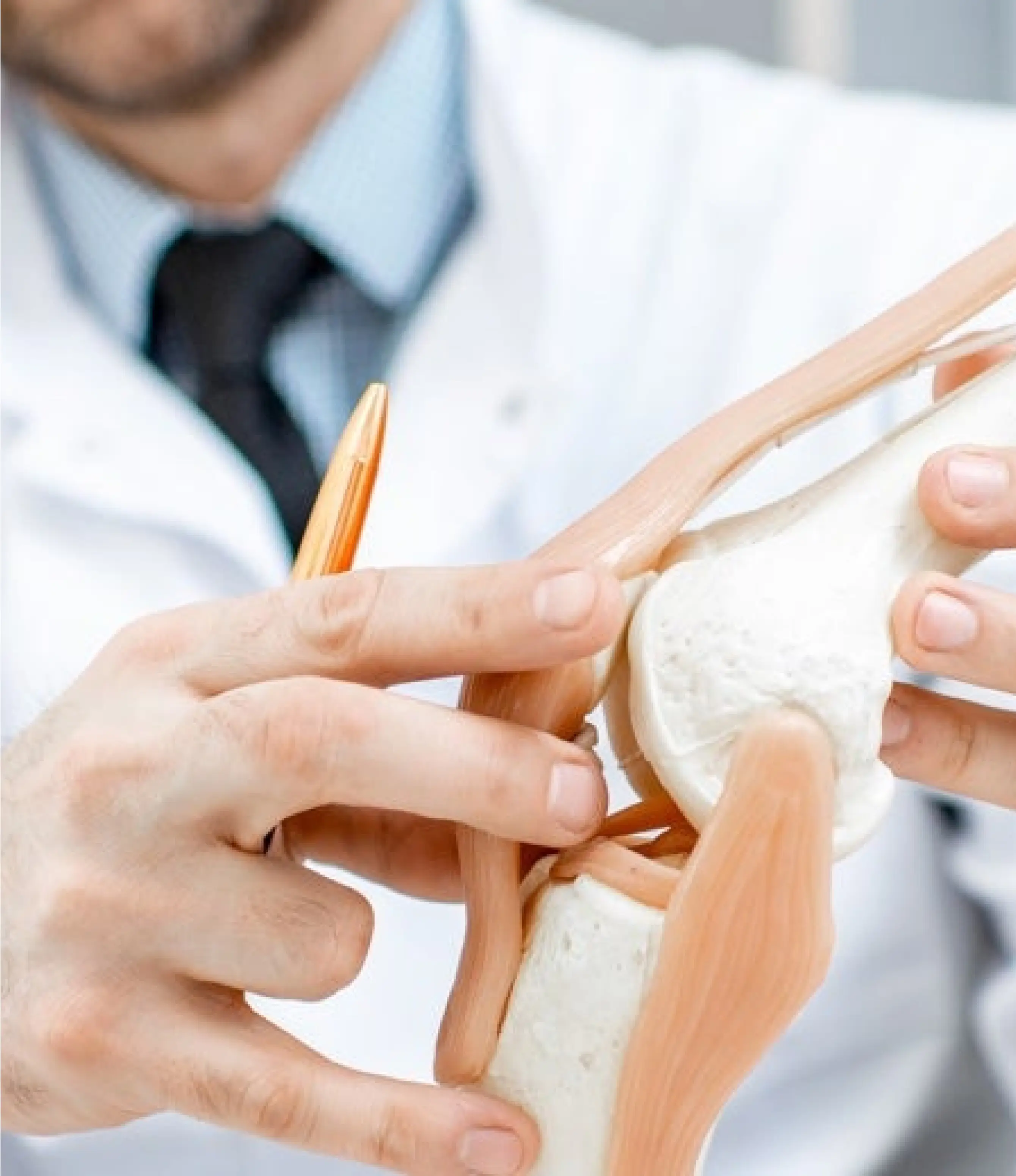
Whether Scaffold-Based MACT may be suitable for you depends on several factors. In addition to the size, location, and characteristics of the cartilage defect, your age, activity level, body weight, and the overall condition of your knee joint are also important considerations. Following a thorough evaluation, a specialist can determine whether this procedure is suitable for you.
Frequently Asked Questions About MACT
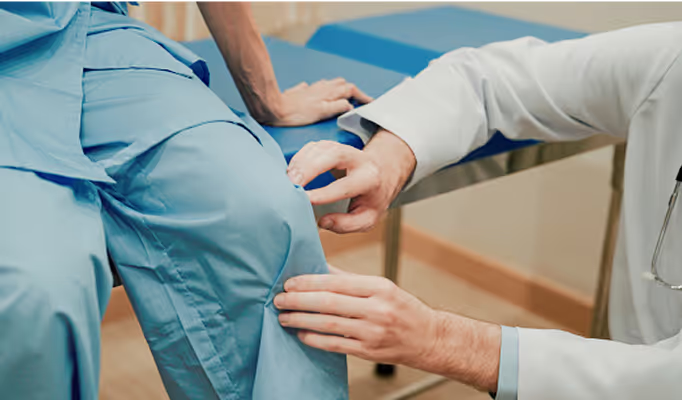
Cartilage damage is usually diagnosed by a specialist in orthopaedics or trauma surgery.
Assessment typically begins with a discussion of your symptoms, their possible causes, your activity level, and your medical history. This is followed by a physical examination of the knee.
Imaging examinations are used to evaluate cartilage damage in greater detail. Magnetic resonance imaging (MRI) is particularly important because it allows visualisation of cartilage and surrounding structures.
In some cases, additional investigations such as X-rays, computed tomography (CT), or arthroscopy (keyhole surgery) may be required.
Based on these findings, your specialist can assess the size and severity of the cartilage defect and discuss appropriate treatment options with you.
Rehabilitation depends primarily on the location of the defect within the knee.
After surgery, the cartilage cells need time to integrate and form new cartilage tissue, allowing the cartilage to gradually regain its function as a shock absorber. The knee is typically rested during the first 48 hours after surgery. Walking aids may then be used for a period of time to reduce stress on the joint, alongside physiotherapy to support recovery.
Gradual rebuilding of muscle strength to support knee stability is an important part of rehabilitation and requires time.
Your treating physician will determine the most appropriate rehabilitation programme for you and adjust it according to your recovery.
If Scaffold-Based MACT does not achieve the desired treatment outcome, further treatment options may be considered. Choosing Scaffold-Based MACT does not limit future treatment options.
In Germany, cell-based cartilage repair procedures may be reimbursed by statutory or private health insurance providers if the relevant medical requirements are met.
Your treatment centre or health insurance provider can advise whether this applies in your individual case.
Possible Risks and Complications
Like any surgical procedure, MACT is associated with certain risks. These may include, for example, infection, inflammation, pain, restricted movement, blood clots, wound-healing complications, or an insufficient treatment outcome.
This list is not exhaustive. Your treating physician will inform you in detail about the expected benefits, possible risks, and available treatment alternatives.

Find a Treatment Centre Near You
Only a medical evaluation can determine whether TETEC procedures may be suitable for your knee. These procedures are generally not recommended in cases of advanced joint degeneration (osteoarthritis).